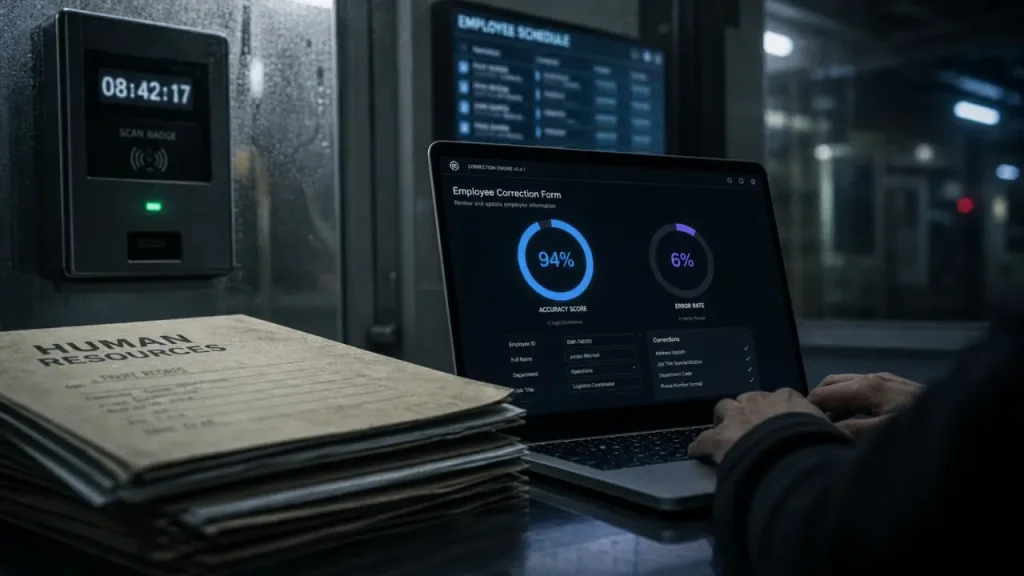
IBM’s AI automation and rehiring story is not a simple case of robots taking jobs and humans coming back. It is more useful than that. IBM showed that AI can handle a large share of repetitive HR work, yet still leave sensitive, ambiguous, or judgment-heavy cases that make human hiring necessary.
What actually happened at IBM’s AI automation and rehiring case?
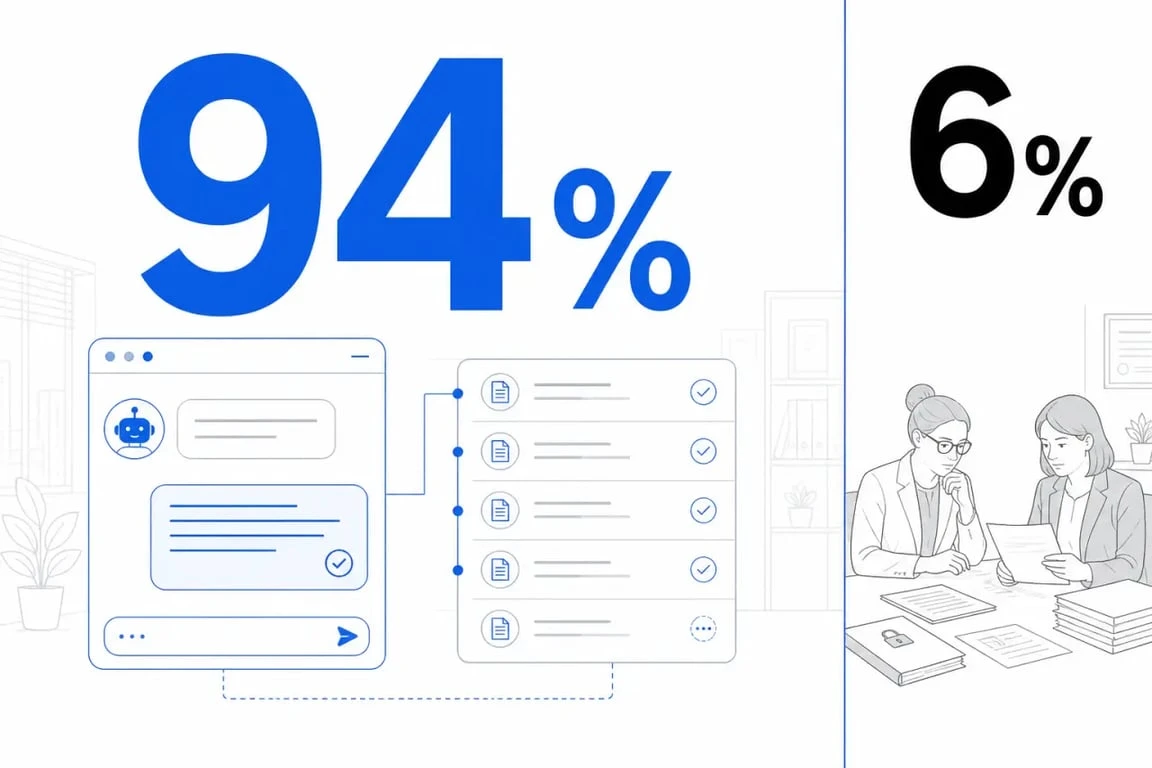
The center of the story is IBM’s internal HR automation system, AskHR. The tool reportedly handled 94 percent of routine HR requests, a striking figure for any large organization trying to reduce administrative friction. For employees asking predictable questions about policies, processes, benefits, or standard workflows, automation could give faster answers and ease the load on HR teams.
That level of automation naturally raised a bigger business question: if AI can answer nearly all routine HR queries, how many human roles are still needed? This is where the IBM AI automation rehiring narrative became awkward. IBM had already been linked to workforce reductions tied to automation, yet it later announced plans to triple its U.S. entry-level hiring in 2026. On the surface, that looks contradictory. In practice, it reflects a distinction many companies are learning: automating tasks is not the same as replacing a workforce.
AskHR showed AI’s strength in routine work
AskHR’s 94 percent figure matters because it shows that AI can be genuinely useful in corporate operations. Routine HR requests are often repetitive, rule-based, and time-consuming. When a system can resolve them quickly, HR professionals spend less time repeating basic information and more time on employee relations, workforce planning, manager support, and organizational design.
But the headline number can also be misleading if read too quickly. A 94 percent success rate in routine queries does not mean 94 percent of an HR function can disappear. It means a specific category of interaction can be heavily automated. The remaining work may be smaller in volume, but much higher in complexity, risk, and business impact.
Why the remaining 6 percent mattered more than it looked
The most important part of the IBM case is not the 94 percent AskHR handled. It is the remaining 6 percent that AI struggled to cover. Those cases included non-routine issues and ethical dilemmas, the kind of requests where a wrong answer can damage trust, create legal exposure, or escalate a workplace conflict.
How IBM Uses Agentic AI to Transform HR Support · IBM explains how AskHR uses agentic AI to answer common questions, reduce support tickets, and improve HR service at scale.
In HR, the hardest cases are rarely the most frequent. A payroll clarification may be easy to automate. A sensitive complaint, a disability accommodation question, a manager-employee dispute, or a decision that affects someone’s career path is different. These moments require interpretation, empathy, context, and accountability. AI can assist, summarize, and route information, but it cannot fully own the consequences of a flawed decision.
Automation fails when the question is not really a question
Many employee requests look simple in a ticketing system but are not simple in reality. An employee may ask about a policy while actually signaling burnout, discrimination concerns, confusion about leadership, or fear of retaliation. A chatbot or AI assistant can spot keywords and provide a procedural answer, but it may miss the human signal behind the request.
This is one reason human oversight remains essential when AI outputs are inconsistent, incomplete, or inaccurate. The problem is not that AI is useless. The problem is that companies can overestimate AI performance once it leaves controlled use cases and enters messy workplace reality.
Think of HR work as a mosaic rather than a conveyor belt. Each tile may look manageable on its own: a policy line, a benefits rule, a manager note, a legal constraint, a personal circumstance, a tone of voice in an email. The picture becomes clear only when someone can see how the pieces interact. AI is strong at retrieving tiles and arranging obvious patterns, but people are still needed to notice when one tile changes the meaning of the whole image. That is where judgment lives, in the exception that reshapes the case.
Why rehiring can be the rational outcome after automation
Rehiring after AI automation can look like an admission of failure, but it can also be a sign of organizational learning. If AI removes repetitive work, the company may discover new needs: more oversight, better data quality, stronger process design, and more people who know how to use AI responsibly.
IBM’s plan to triple U.S. entry-level hiring in 2026 is especially revealing. Entry-level roles are not just low-cost labor. They are the beginning of a talent pipeline. If a company cuts too deeply at the junior level, it may reduce its future supply of experienced managers, technical specialists, product leaders, and operational experts. Automation can improve efficiency today while creating a capability gap tomorrow if hiring is paused too aggressively.
The hidden cost of cutting too fast
Over-automation can create duplicated effort instead of savings. When AI gives an incomplete answer, a human often has to review, correct, escalate, and explain it. If the organization has already removed too many experienced workers, the remaining employees may spend more time fixing AI-generated problems than benefiting from automation.
That creates a productivity trap. Leaders expect faster decisions, but teams face slower resolutions because edge cases pile up. Employees expect convenient service, but lose confidence when the system cannot handle nuance. Managers expect cost reduction, but discover that quality issues, escalations, and oversight needs were never fully priced into the automation plan.
Human-AI collaboration is not a softer version of replacement
The better model is not “AI instead of people” or “people instead of AI.” It is task redesign. AI can take the first pass on routine requests, summarize documentation, detect patterns, and reduce administrative load. Humans can handle exceptions, ethical calls, negotiations, coaching, and decisions that require responsibility.
This distinction matters for executives. If automation is measured only by headcount reduction, teams are pushed to remove people before the system is ready. If automation is measured by service quality, cycle time, risk reduction, and employee experience, the business case becomes more balanced. Rehiring is then not a reversal of AI strategy; it is a correction of workforce design.
IBM is not the only company facing an AI layoff reversal
IBM’s case fits a broader pattern: companies experimenting with AI-driven redundancies sometimes reverse course when service quality, operational complexity, or technical limits become visible. The details differ, but the lesson is similar. AI can reduce repetitive work, yet the absence of experienced humans can expose weaknesses that were hidden during planning.
| Company | AI or automation issue | Why humans came back into focus |
|---|---|---|
| IBM | AskHR handled 94 percent of routine HR requests | The remaining 6 percent involved non-routine issues and ethical dilemmas that required human oversight |
| Commonwealth Bank of Australia | Customer service cuts affected 40 staff | Service and operational realities pushed the company to reconsider the impact of automation-led reductions |
| Ford | Engineering workforce changes intersected with automation and business needs | The company reemployed hundreds of experienced human engineers, underlining the value of technical judgment |
The pattern does not prove that AI layoffs always fail. It shows that the easiest work to automate is not always the work that determines whether a business runs well. Customer service, HR, engineering, compliance, and operations all contain repeatable tasks, but they also contain exceptions, relationships, tacit knowledge, and accountability.
What employers should learn before replacing workers with AI
The IBM AI automation rehiring story should push leaders toward a more disciplined approach. The question is not whether AI should be used. In many workflows, it clearly should. The question is whether the company understands which tasks are safe to automate, which decisions require a human, and which skills must be preserved for the future.
Separate tasks, roles, and capabilities
A common mistake is to treat a role as a bundle of automatable tasks. In reality, a job may include routine administration, relationship management, escalation handling, risk judgment, coaching, and institutional memory. AI may automate part of the role while increasing the value of the remaining human work.
Before cutting jobs, employers should map workflows at a more granular level. Which requests are repetitive? Which require interpretation? Which create legal, ethical, or reputational risk? Which need a named person to be accountable? This task-level analysis is more reliable than assuming that a high automation percentage justifies broad headcount reduction.
Protect the entry-level pipeline
Entry-level hiring deserves special attention. When companies remove junior roles, they may also remove the training ground where future experts learn the business. IBM’s plan to triple U.S. entry-level hiring in 2026 signals that large organizations still need people entering the system, learning processes, and building judgment over time.
AI can support new hires by accelerating onboarding, answering routine questions, and giving employees access to knowledge that used to sit with senior colleagues. But it cannot replace the experience gained from handling real ambiguity. Future-ready organizations will likely combine automation with deliberate training, upskilling, and supervised decision-making.
The practical takeaway is clear: automation should shrink repetitive friction, not hollow out human capability. IBM’s experience shows that the future of work is less about replacing people wholesale and more about deciding where human judgment, accountability, and learning still create value that AI cannot reliably supply.

- The Best Marketing Conferences, Compared by Specialty, Audience, and Outcomes - 3 October 2026
- Business Spend Management Software Gives Finance Control Before Month-End - 2 October 2026
- Business Safe Online: Secure Access, Test Recovery, Limit Downtime - 22 September 2026